
The Anonymous Crowd: Finding Yourself When You Are No One to Everyone
Have you ever felt completely alone while surrounded by hundreds of people? Modern life often pushes us furthest from ourselves precisely when we are most surrounded by others. Discover the urban anonymity paradox and the gentle, radical act of learning to truly be with yourself.

On solitude, the noise of cities, and the quiet art of coming home to yourself.
This article is an updated and expanded version of a piece originally published on Substack, now revised with recent clinical research and updated medical citations.
By Dr. Cristiana Coneru, MD, FRSM, FRCEM, CFMP, HCTP, Dip CNM, NBC‑HWC Founder of Health Visioning
"Loneliness is a sign you are in desperate need of yourself."- Rupi Kaur, Milk and Honey (2014)
Have you ever felt completely alone while surrounded by hundreds of people?
You stand on a crowded platform, shoulder to shoulder with strangers, and yet something inside you aches with a quiet, unnamed distance.
Not from them - from yourself.
Many introverted people feel most alive in solitude. Silence is not emptiness to them; it is replenishment. The noise of the modern world - its relentless hum, its digital clamour, its performative busyness - drains rather than fills them.
As the psychologist Carl Jung observed, the introvert's energy moves inward, renewed by reflection rather than stimulation (Jung, 1923).
But the territory of this inner life is being steadily invaded. Not everyone has the luxury Thomas Hardy described - that pastoral distance from the madding crowd (Hardy,1974). Most of us live at the center of the noise. The question then becomes not how to escape it, but how to remain yourself within it.
I. The physical proximity paradox

Picture a subway car at rush hour. Hundreds of bodies press together in a steel capsule beneath the city. People breathe the same recycled air, feel the same metallic vibrations through their feet, and yet remain sealed inside entirely separate worlds. No eyes meet. No words are exchanged. The physical intimacy is total; the emotional distance, absolute.
This is what sociologists call the "urban anonymity paradox" - the simultaneous closeness and invisibility that defines life in densely populated spaces (Milgram, 1970). You are, in this moment, an unknown face. You have a name no one will say, a history no one will ask about, and an inner world no one will see. You are, in the most complete sense, alone in a crowd.
"It is easy in the world to live after the world's opinion; it is easy in solitude to live after our own; but the great man is he who in the midst of the crowd keeps with perfect sweetness the independence of solitude."- Ralph Waldo Emerson, "Self-Reliance" (1841).
Emerson's words feel almost prophetic now. The "crowd" he wrote of in the nineteenth century was a physical gathering of neighbours and townspeople. Ours is a crowd that fits in a pocket - a vibrating rectangle of notifications, feeds, and curated lives that follows us everywhere, even into the bath, even into bed (Turkle, 2011).
The thesis of this essay is simple, though its practice is not: modern life often pushes us furthest from ourselves precisely when we are most surrounded by others. The cure is not more people. It is the gentle, radical act of learning to truly be with yourself.
II. Alone in the crowd: why we feel unseen

I used to think loneliness was about being alone. But I discovered that the loneliest place on earth is not an empty room - it is a busy café where no one is watching and no one expects you to speak.
For many years I lived in large cities swarming with people. Every morning, taking the tube to work, I witnessed something quietly devastating. All around me were people who were only physically present. Some hammered out emails before nine. Others scrolled news feeds, stared at tablets, buried themselves in newspapers. Everyone travelling in the same direction, at the same hour, for the same exhausted reasons - and yet each in a hermetically sealed world of their own making.
On the journey home: the same script, other actors, the same play. A sad theatre of existing rather than living.
"To live is the rarest thing in the world. Most people exist, that is all."- Oscar Wilde ( as cited in Pearson, 1946).
Part of what makes the crowded city so isolating is that its exchanges are overwhelmingly surface-level. We have developed an elaborate social grammar of smallness - brief nods, weather remarks, polite non-answers - that maintains the appearance of connection while carefully avoiding it (Goffman,1959). These performances satisfy the form of sociality without its substance.
It also helps to remember that being alone and feeling lonely are not the same thing. Loneliness is better understood as a gap between the connections we have and the connections we need, which is why some people feel lonely in a crowd while others are content with only a few close ties (Gehrman, 2023). A survey of more than 3,000 Japanese adults found that how isolated people perceived themselves to be was more closely tied to loneliness and to depressive symptoms than the sheer size of their social network was, although, because the survey captured a single moment in time, it cannot show what causes what (Kushibiki et al., 2024).
The digital world compounds this beautifully. We have more tools for connection than any generation in history, and we are, by many measures, lonelier (Cacioppo & Patrick, 2008). Network research points the same way: in an analysis of thousands of adults from the Framingham Heart Study, loneliness clustered within social networks and appeared to spread from person to person, with the people at the edges of those networks most affected (Cacioppo et al., 2009). Social media offers the comforting illusion of presence - likes, comments, a curated stream of faces - while the depth that human psychology actually requires remains perpetually just out of reach. We scroll past each other like strangers on a train.
"Loneliness does not come from having no people around you, but from being unable to communicate the things that seem important to you."- Carl Jung ( as cited in Jaffe, 1943).
There is also something more existential at work. When you are one of eight million faces in a city, the weight of your own anonymity can press surprisingly hard. No one knows your name on the bus. No one sees the grief you carried to the office, or the small triumph you celebrated quietly at your desk. You begin to wonder, in the small hours, whether a life lived unwitnessed still fully counts (Cacioppo & Patrick, 2008). It does. But you have to learn to be your own witness first.
"People empty me. I have to get away to refill."- Charles Bukowski (as cited in Sounes, 1948).
Are you feeding your body, or are you soothing your loneliness?
When the digital world leaves us feeling unseen, we often turn inward to find comfort - sometimes using food to quiet the emotional distance we feel from others and ourselves. Take our brief, gentle quiz to uncover the hidden relationship between your emotions and your eating habits.
III. The anatomy of "me time": a memory from the hills
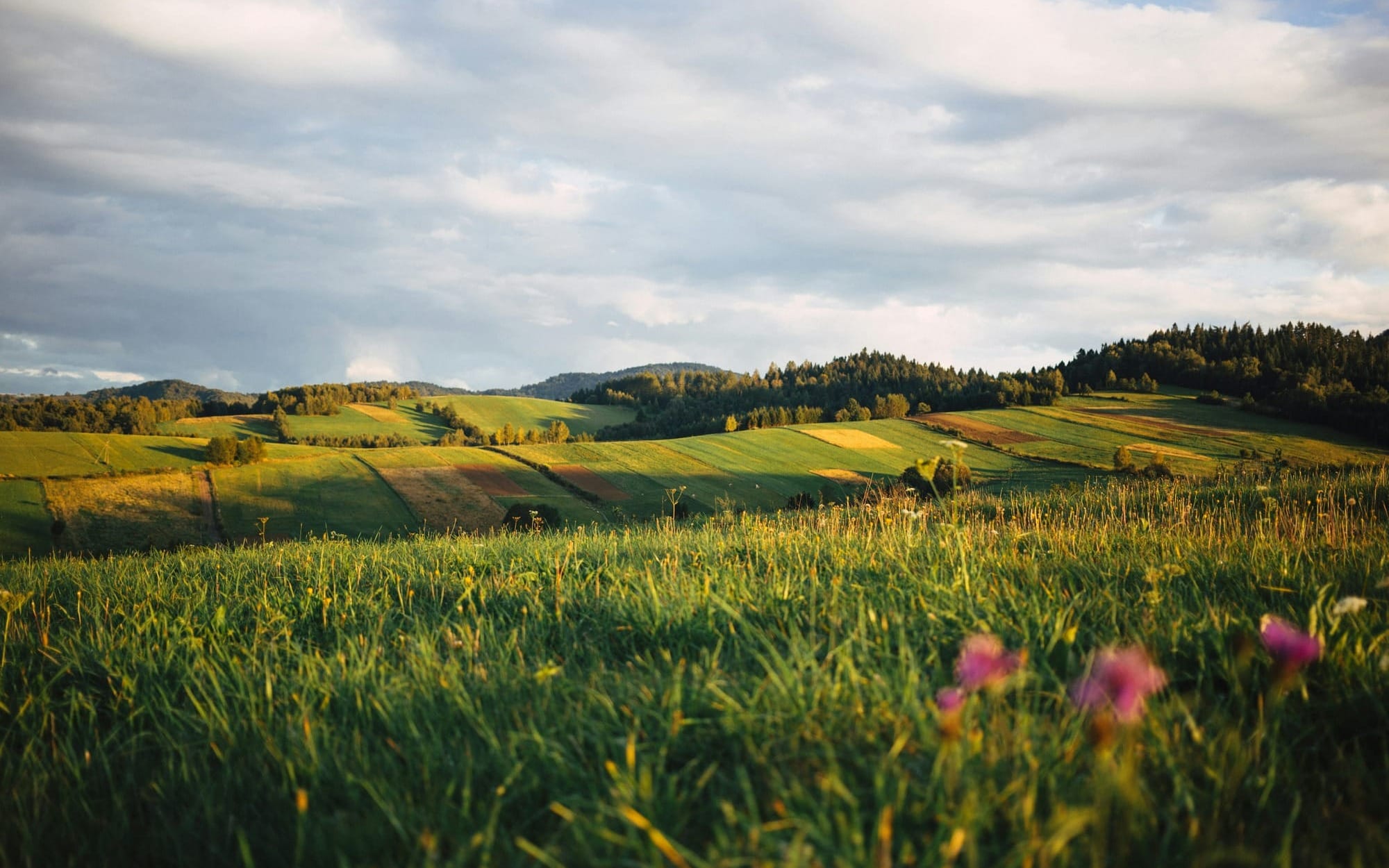
Writing these lines, I remember as if it were yesterday: long summer holidays with my grandparents in the countryside of Eastern Europe. The landscape was all hills and valleys, a quiet magnificence. My grandmother had goats, and each morning she would send me out with them - a small shepherd, two lazy dogs, and a little gang of creatures perpetually on the point of mischief. I took a book. I lay in the grass. I felt the vibration of the earth beneath me, the sky an endless kingdom above. The birds performed their free concerto. The wind brought the scent of wildflowers. The dogs used my abdomen as a pillow and opened one eye at the world from time to time. I did not know then that what I was living was called "me time," or that lying in that grass was something called grounding. The years have passed, but those memories live on. A sweet reminder that life can be slow, and peaceful, and entirely enough.
Solitude, in the truest sense, is not loneliness with a different name. It is something far more generous. The philosopher and theologian Paul Tillich made the distinction beautifully: loneliness is the pain of being alone; solitude is the glory of being alone (Tillich, 1963). One is absence; the other is presence - presence with yourself.
Research in psychology bears this out. Solitude, when freely chosen, is associated with creativity, emotional regulation, and a strengthened sense of self (Long & Averill, 2003). Introverts in particular - who process experience deeply and whose nervous systems respond more intensely to stimulation - need this quiet time not as indulgence but as restoration (Cain, 2012). To deny an introvert their solitude is like denying a musician their instrument. They become muted, diminished, quietly desperate.
Solitude and crowds are not always enemies, either. Psychologist Bella DePaulo (2015) has written that being alone in a busy city can carry its own appeal: you can be private and free, without being cut off. The picture is more complicated for some people. A recent narrative review describes a "solitude-loneliness paradox" in autistic people, who often report both greater loneliness and a stronger preference for time alone than their peers (Muris et al., 2026). That review concerns autism specifically, so it should not be stretched to cover introverts in general, but it is a useful reminder that wanting solitude and feeling lonely can sit side by side.
The great Stoic philosopher Seneca wrote often about the art of returning to oneself. He urged his friend Lucilius to withdraw from the crowd whenever possible, not out of misanthropy but out of self-preservation: to consort with the crowd, he argued, is to risk losing the thread of one's own character (Seneca, 65 CE/2015).
And the English essayist Francis Bacon, who admired Seneca deeply, captured the same thought with aching precision in his essay "Of Friendship":
"A crowd is not company; and faces are but a gallery of pictures; and talk but a tinkling cymbal, where there is no love."— Francis Bacon, "Of Friendship," Essays (1625).
A note on attribution: This quote is sometimes misattributed to Seneca the Younger, given the philosophical kinship between the two writers. It is in fact from Francis Bacon's Essays (1625). specifically the essay "Of Friendship." Bacon was a devoted reader of Seneca, and their thinking on solitude and the crowd runs remarkably parallel - which may explain the confusion.
To cultivate an inner life - to build, as it were, a rich interior home - is to make yourself less dependent on the crowd's recognition. When your sense of worth is rooted inward, the noise outside becomes something you can choose to enter and leave, rather than something that enters and leaves you.
IV. Practical rituals for the modern unknown face

The city will not go quiet. The feeds will not slow. And most of us cannot retreat to hillsides with goats. So the practice of solitude must become something more portable - a quality of attention we carry into ordinary moments rather than a place we travel to.
Here are some threads to begin pulling:
Make something slowly, for yourself. Cook a meal you will not photograph. Brew tea with the deliberateness of ceremony. Walk a route you know well with your phone in your pocket. These small acts of unhurried attention are not wasted time - they are the substance of a life (Newport, 2019). They return you to your own senses.
Write. A journal, a Substack, a single sentence on a paper napkin - it does not matter. The act of writing is the act of noticing your own thoughts, which is perhaps the most radical thing a person can do in a world designed to keep you reacting rather than reflecting (Pennebaker & Smyth, 2016). Write about what moved you today. Write about the quality of light on the pavement. Write about the dream you half-remember. You are building a record that says: I was here, and I was paying attention.
Practice low-stakes human warmth. The antidote to anonymity is not dramatic intimacy - it is the small, brave, ordinary act of acknowledging another person. Say good morning to the person behind the café counter and mean it. Hold a door. Let someone merge in traffic with a wave. These micro-moments of recognition - what psychologists call "minimal social interaction" - have a measurable positive effect on wellbeing for both parties (Epley & Schroeder, 2014). You do not have to become someone's best friend to dissolve a little of the anonymous ache. You only have to be briefly, genuinely present.
Spend time in nature when you can. Research consistently shows that time in natural environments reduces the neurological load of urban overstimulation, lowering cortisol, restoring directed attention, and inducing what psychologists call "soft fascination" - an effortless, restorative form of noticing that the city rarely permits (Kaplan, 1995). You do not need hills and goats. A park bench. A tree whose name you do not know. Even a window with a patch of sky. One note of caution: nature is a companion to human connection, not a replacement for it. In a three-wave study of Chinese university students, a stronger connection to nature actually strengthened, rather than weakened, the link between loneliness and later problematic social media use (Yu et al., 2026).
Be ruthless about protecting your inner quiet. Turn the phone face-down. Let the notification wait. There is a difference between being available and being present, and we have spent years confusing the two. Your inner world requires the same tending as a garden - it needs space, and silence, and the occasional decision not to let everything in.
V. You are never truly alone with yourself

Hunter S. Thompson, in a letter to a friend, wrote one of the most quietly devastating truths about loneliness and selfhood: that we are all, finally, alone - and that this is precisely why self-respect matters so deeply. As he put it, how can you respect yourself if you must look in the hearts and minds of others for your happiness? (Thompson, 1997).
This is the realization the anonymous crowd can lead you toward, if you let it. The crowd will not hold your worth for you. The feed will not validate your existence. The busy café does not owe you witness. But you - the person reading this right now, on whatever device, in whatever corner of the world - you are always here. You are always company.
The introvert's instinct toward solitude is not a flaw or a wound. It is a form of intelligence. A knowledge that the self is the one companion who will accompany you everywhere, who knows everything, who will never leave. Learning to enjoy that company - to find it interesting, to treat it with tenderness - is not selfishness. It is the foundation from which all genuine connection with others eventually grows (Cain, 2012).
Next time you find yourself alone in a sea of people, try this: do not reach for your phone. Do not perform busyness. Sit with the strangeness of it. Let yourself be anonymous for a moment - not as a loss, but as a freedom. You are not nobody. You are just temporarily unobserved. And in that unobserved space, you are exactly yourself.
That is a rare and beautiful thing.
Go there when you can. Stay a while. You will find, if you are patient, that the company is excellent.
If this essay found you in a moment of quiet - keep that moment a little longer.
The crowd will still be there when you return.
Bring the quiet back into your daily routine.
Reclaiming your space and your vitality in a crowded world takes a structural shift. If you are ready to deeply restore your nervous system and break the cycle of exhaustion, explore our comprehensive guide, The Tired and Wired Reset. Inside, you will find a complete framework for grounding, overcoming chronic fatigue, and returning home to a balanced, energized self.
References
Bacon, F. (1625). Of friendship. In Essays or counsels, civil and moral. Hanna Barret and Richard Whitaker.
Cacioppo, J. T., Fowler, J. H., & Christakis, N. A. (2009). Alone in the crowd: The structure and spread of loneliness in a large social network. Journal of Personality and Social Psychology, 97(6), 977–991. https://doi.org/10.1037/a0016076
Cacioppo, J. T., & Patrick, W. (2008). Loneliness: Human nature and the need for social connection. W. W. Norton & Company.
Cain, S. (2012). Quiet: The power of introverts in a world that can't stop talking. Crown Publishers.
DePaulo, B. (2015, August 11). Alone in a crowd: There's something special about it. Psychology Today. https://www.psychologytoday.com/us/blog/living-single/201508/alone-in-a-crowd-theres-something-special-about-it
Emerson, R. W. (1841). Self-reliance. In Essays: First series. James Munroe and Company.
Epley, N., & Schroeder, J. (2014). Mistakenly seeking solitude. Journal of Experimental Psychology: General, 143(5), 1980–1999. https://doi.org/10.1037/a0037323
Gehrman, E. (2023, Spring). Alone in the crowd. Harvard Medicine Magazine. https://magazine.hms.harvard.edu/articles/alone-crowd
Goffman, E. (1959). The presentation of self in everyday life. Anchor Books.
Hardy, T. (1874). Far from the madding crowd. Smith, Elder & Co.
Jaffé, A. (Ed.). (1963). Memories, dreams, reflections (R. Winston & C. Winston, Trans.). Pantheon Books. (Recounting conversations with C. G. Jung)
Jung, C. G. (1923). Psychological types (H. G. Baynes, Trans.). Harcourt, Brace & Company.
Kaplan, S. (1995). The restorative benefits of nature: Toward an integrative framework. Journal of Environmental Psychology, 15(3), 169–182. https://doi.org/10.1016/0272-4944(95)90001-2
Kaur, R. (2014). Milk and honey. Andrews McMeel Publishing.
Kushibiki, N., Aiba, M., Midorikawa, H., Komura, K., Sugawara, D., Shiratori, Y., Kawakami, N., Ogawa, T., Yaguchi, C., & Tachikawa, H. (2024). How do social networks, perception of social isolation, and loneliness affect depressive symptoms among Japanese adults? PLOS ONE, 19(4), Article e0300401. https://doi.org/10.1371/journal.pone.0300401
Long, C. R., & Averill, J. R. (2003). Solitude: An exploration of benefits of being alone. Journal for the Theory of Social Behaviour, 33(1), 21–44. https://doi.org/10.1111/1468-5914.00204
Milgram, S. (1970). The experience of living in cities. Science, 167(3924), 1461–1468. https://doi.org/10.1126/science.167.3924.1461
Muris, P., Deckers, A., Donkers, F., Ollendick, T. H., & Begeer, S. (2026). The joy and the pain of being alone: Managing the solitude-loneliness (SOLO) paradox in people high on the autism spectrum. Clinical Child and Family Psychology Review, 29(3), 607–623. https://doi.org/10.1007/s10567-026-00576-4
Newport, C. (2019). Digital minimalism: Choosing a focused life in a noisy world. Portfolio/Penguin.
Pearson, H. (1946). Oscar Wilde: His life and wit. Harper & Brothers.
Pennebaker, J. W., & Smyth, J. M. (2016). Opening up by writing it down: How expressive writing improves health and eases emotional pain (3rd ed.). The Guilford Press.
Seneca, L. A. (2015). Letters on ethics: To Lucilius (M. Graver & A. A. Long, Trans.). University of Chicago Press. (Original work composed ca. 65 CE)
Sounes, H. (1998). Charles Bukowski: Locked in the arms of a crazy life. Grove Press.
Thompson, H. S. (1997). The proud highway: Saga of a desperate Southern gentleman, 1955–1967. Villard Books.
Tillich, P. (1963). The eternal now. Scribner.
Turkle, S. (2011). Alone together: Why we expect more from technology and less from each other. Basic Books.
Wilde, O. (n.d.). On living and existing. As cited in Pearson, H. (1946). Oscar Wilde: His life and wit. Harper & Brothers.
Yu, M., Peng, L., Tang, L., Xu, J., Liu, Z., & Ma, Y. (2026). Buffer or catalyst? Longitudinal association between social avoidance and problematic social networking sites use: The mediating role of loneliness and the moderating role of nature connectedness. International Journal of Mental Health and Addiction, 24(5), 4159–4175. https://doi.org/10.1007/s11469-025-01607-x
AI disclosure
This article reflects the author's own clinical experience, ideas, and perspective. Claude (Anthropic) was used for editorial support in preparing this piece - including research assistance, citation verification, and structural polishing.