The Silent Strength of Scrolling: Unmasking the Online Hater, Finding Your Peace
Why do people hate online, what does it do to our brains, and how do we stay human anyway? Explore the neuroscience of cruelty, the lasting weight of digital words, and why choosing kindness is a quiet act of resilience.

A warm guide to digital resilience, the neuroscience of online hate, the psychology of cruelty, and the quiet revolution of choosing kindness
This article is an updated and expanded version of a piece originally published on Substack, now revised with new research on the brain and online hate, and on kindness as an inner strength.
By Dr. Cristiana Coneru, MD, FRSM, FRCEM, CFMP, HCTP, Dip CNM, NBC-HWC Founder of Health Visioning
Why do people hate online, what does it do to our brains, and how do we stay human anyway? A warm, research-backed guide to digital resilience and the quiet power of kindness.
"There exists, for everyone, a sentence - a series of words - that has the power to destroy you. Another sentence exists, another series of words, that could heal you." - attributed to Philip K. Dick, VALIS
The Weight of a Word
I have been lately again about the weight of words.
Not their grammar or their cleverness, but their weight - the way a sentence can slip beneath someone's ribs and stay there long after the conversation has moved on. The way a phrase, tossed out without thought in a comment section, can echo in someone's mind at two in the morning when they can't sleep.
We forget this. We forget it because the internet has made words feel disposable, instant, consequence-free. We type, we tap, we send - and we scroll away, never witnessing where those words land.
But they do land. They always land.
There are people walking beside us - and scrolling beside us - carrying quiet, unseen bruises. A harsh word can deepen them. A gentle one can help them fade. We never know which moment will be the one that tips someone toward breaking - or toward healing. So let me ask you something before we go any further:
Are your words a balm or a burden?
In a world already heavy with noise, choosing gentleness is its own kind of quiet revolution. And understanding why some people choose cruelty instead - really understanding it, with curiosity rather than contempt - might be the most powerful act of digital resilience you can practice.
Key Research at a Glance

What "online hating" means: posting an explicitly negative assessment of a person or object, mainly to express a negative attitude and without supporting reasons; a "hater" does this routinely (Malecki et al., 2021).
Who hates online: psychopathy and sadism are among the personality traits most often linked to trolling and online hating (Buckels et al., 2019; Sorokowski et al., 2020).
Emotion regulation: in a meta-analysis of 137 articles, difficulties regulating emotions were associated with higher aggression in general (Smith et al., 2026).
Hate and the brain: in a small fMRI experiment, people who read hateful comments showed reduced activity in a brain region involved in understanding others' mental states when they then read about people in pain (Pluta et al., 2023).
Kindness: a one-week "counting kindnesses" intervention was linked to increased happiness (Otake et al., 2006), and a review frames kindness as a stress-reduction and health-promotion intervention (Fryburg, 2022).
The Mirror of Malice: Why They Hate

Open any YouTube video with more than a few thousand views, or scroll through the comments on a popular post, and you will see it: a particular brand of vitriol that feels almost performative. The cruelty is loud. It is specific. And it is almost never actually about you.
So what is it about?
The Dark Tetrad Factor
Research suggests that psychopathy and sadism are among the strongest personality predictors of trolling and online hating behavior, with several studies linking these traits to enjoyment of other people's discomfort and to aggressive online conduct (Buckels et al., 2019; Sorokowski et al., 2020; Pabian & Vandebosch, 2023).
Chronic online haters are not, in most cases, clinically diagnosed sociopaths - but they often exhibit what researchers call Dark Tetrad traits: narcissism, Machiavellianism, psychopathy, and sadism. Some studies also describe "negative social potency," a genuine sense of reward derived from causing distress in others (Buckels et al., 2019).
This is not easy to sit with. The idea that someone might enjoy your pain is deeply uncomfortable. But naming it clearly is also strangely liberating: their behavior is not a verdict on your worth. It is a symptom of their inner world.
The Inadequacy in Disguise
Not every hater is driven by sadism. Many are driven by something far more ordinary and far more human: a struggle to manage difficult feelings.
A large 2026 systematic review and meta-analysis of 137 articles found that difficulties regulating emotions were associated with higher aggression, as were maladaptive regulation strategies (Smith et al., 2026). That review looks at aggression in general rather than online behavior alone, so I offer it as a lens rather than proof. But it fits what many of us sense: when someone cannot carry the weight of their own distress, it can become easier to redirect that energy outward - to tear down rather than build up.
In other words, when someone mocks your life choices, your appearance, your work, or your vulnerability - they are often showing you a mirror. The reflection belongs to them.
"Whenever there is a human being, there is an opportunity for a kindness." - Seneca
The Displaced Storm
There is a third profile worth understanding: the person who is not especially dark or especially envious, but who is simply in pain and does not know where to put it.
For some people, the internet becomes a space where they can finally feel dominant - where their words have impact, where they can be heard, even if only through outrage. They carry a private storm - loneliness, grief, social exclusion, burnout - and they bring it online, where anonymity and deindividuation can lower the threshold for aggression (Zimbardo, 1969).
This does not excuse the behavior. But understanding it can dissolve some of the sting. The person leaving a vicious comment at 11 p.m. on a Tuesday is likely not flourishing. They are, in their own distorted way, reaching out - just through destruction rather than connection.
The Neuroscience Nobody Talks About
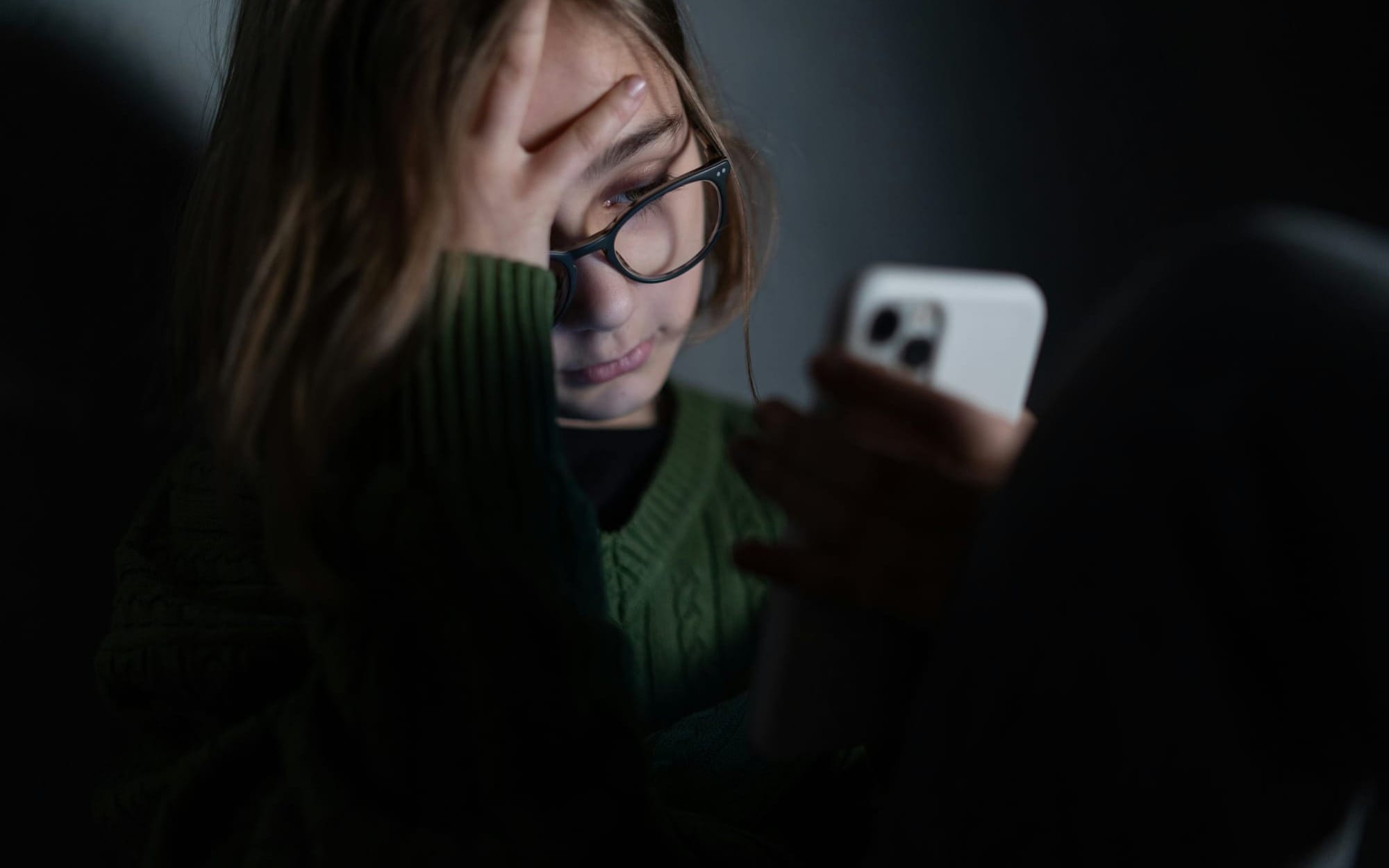
Here is something that should give us all pause: social rejection and social pain engage some of the same neural systems involved in physical pain, which helps explain why humiliation, exclusion, and public shaming can feel viscerally overwhelming (Eisenberger, 2012).
This means that when creators, writers, and public figures speak about online hate burning them out, they are not being melodramatic. Their nervous systems are responding to social threat as it evolved to.
What Hate Does to the Brain of the Person Reading It
There is a second finding I find even more striking, because it is not about the target of hate at all. It is about everyone who simply reads it.
In an experiment published in Scientific Reports, Polish researchers randomly assigned 30 young adults to read either hateful comments about Arab and Muslim migrants or neutral comments about current affairs while undergoing brain scanning. Afterwards, everyone read short stories in which people experienced painful or non-painful events. Those who had been exposed to the hateful comments showed reduced activity in the right temporoparietal junction - a region involved in perspective-taking and in understanding what other people are thinking and feeling - and this reduction appeared whether the person in pain was from their own group or from the outgroup (Pluta et al., 2023).
The authors interpret this as suggesting that hate speech may blunt the ability to understand other people's mental states more broadly, not only toward the group being targeted. It is worth being honest about the limits: this was a small experiment with 15 people per group, and one study is a signal, not a settled fact. But it gives a neurobiological shape to something many of us feel intuitively - that a diet of contempt can leave us a little less tender toward everyone.
More broadly, Mario Mendez has proposed a neurobiological model of group hate, placing hate within a brain-behavior framework (Mendez, 2025). For a gentle, general-audience introduction to how hate and social media interact with the nervous system, see this counseling-practice overview (Arato, n.d.); it is a practice blog rather than a research paper, so treat it as a starting point.
The Bystander Dimension
If reading hate can dim our empathy circuits, then the bystander is never really neutral. Simply choosing not to amplify cruelty - and choosing instead to reinforce something constructive - can help shift the emotional tone of a digital space. And protecting what you read is not avoidance. It is hygiene for the part of you that cares.
A Personal Interlude: When It Happened to Me

I want to pause here and tell you something personal, because leaving it out would make this article feel dishonest.
I'm lucky. In all the time I've spent writing online, I've encountered very little direct hostility. But "very little" is not "none." And even a single careless jab can land harder than you expect when you've put something genuine into the world.
A few months ago, I shared a post on LinkedIn - a piece I had worked on carefully, opening with "A new Nature Neuroscience study..." and linking to research I had double-checked myself. Then came a comment. The person noted, in a tone that felt more like a flick than feedback, that I hadn't included a clickable link. And then, almost as an afterthought, added that there's a lot of "garbage like this" online.
For a moment, I just sat there.
The science was real. The references were real. The work was mine. But what struck me wasn't the accusation - it was the pattern. When I looked at his profile, I saw he had left nearly identical comments on several other posts that same day, including those written by seasoned researchers.
He wasn't evaluating. He was prowling.
I replied kindly, added a clickable link, and kept my tone warm.
He never responded. Not even a simple "got it." Because, of course, the link was never what he wanted.
What I felt wasn't anger. It was a kind of quiet sadness - for him, and for the people he had dismissed that day who might have felt that sting far more deeply than I did. And I thought about what the research suggests: that people who roam comment sections scattering contempt are rarely thriving, and that this kind of cruelty often says more about the sender than the recipient (Sorokowski et al., 2020).
So I did the only thing that felt right. I let it go. And I kept writing.
In the past few days, I've watched the same pattern repeat itself: people who find the time to write long comments but not the time to read the work they're reacting to. People who paste the same dismissive label onto multiple posts in a single afternoon. And what strikes me now is not the sting - it's the sadness. Not for me, but for them. Because when you're grounded in your own work, these moments don't wound; they reveal. They show you who is engaging, and who is simply projecting their own noise into the world.
I'm sharing this not because it was dramatic - it wasn't. I'm sharing it because if even a small, low-stakes moment like this can make you hesitate for a heartbeat, imagine what it feels like for someone who faces this every day, at scale, about work that is deeply personal.
That is why this matters. That is why we're here.
A Manifesto for Digital Maturity: How Not to Behave

Whether you have been the sender or the receiver - and most of us have been both, in different moments and different degrees - here is a practical guide for showing up online with more intentionality.
1. The Human Behind the Handle Check
Anonymity can create what psychologists call deindividuation - a state in which being unidentifiable and part of a crowd weakens self-awareness and restraint (Zimbardo, 1969).
When you see "username37462" rather than a face, it becomes much easier to be cruel.
Before you hit send on something sharp, try this: imagine saying those exact words to that person's face, while someone who loves them is standing beside them. If your stomach turns at the thought, that is important information. Delete the draft. Or better yet, write something you would actually be proud of.
2. The Three-Second Pause
Early research on ego depletion - the idea that self-control draws on a limited resource that a long, stressful day can drain - suggested that people become more impulsive when that resource is strained (Baumeister et al., 1998). It is only fair to add that later large-scale replication efforts have questioned how robust the effect is, so I offer it as a plausible explanation rather than a proven mechanism.
Whatever the mechanism, most of us recognise the experience: that late-night urge to fire off a cutting reply often comes from a tired, stretched version of us, not our considered self.
Wait three seconds. Better yet, wait until morning. The comment section will still be there. And you may find you no longer want to say what felt so urgent the night before.
3. Starve the Negative Social Potency
Trolls who derive genuine satisfaction from causing distress are often seeking a reaction. Your distress is their reward (Buckels et al., 2019). Engaging with them - however righteous your response - can give them exactly the stimulus they are looking for, and on many platforms any engagement may also keep the exchange visible.
Instead, try this: if you see a cruel comment on someone else's content, resist the urge to argue with the hater. Post a separate, standalone positive comment for the creator instead. You surround the hate with something warmer, and you give the creator - and the platform - something better to respond to.
4. Recognize Your Own Displaced Frustration
This is the uncomfortable one. Sometimes we are the ones carrying a storm. A terrible meeting, a disappointing conversation, a creeping sense that we are falling behind - and suddenly, some stranger's success feels like a provocation.
Before leaving a biting comment, ask yourself honestly: am I actually angry at this video - or am I tired, lonely, or stressed? Emotional maturity is realizing that the comment section is not your therapist's couch. Our inner weather belongs to us. It is ours to tend.
"If you have a choice between being right and being kind, choose kind." - commonly attributed to Wayne W. Dyer
5. Use the T.H.I.N.K. Filter
Before posting, run your words through this simple filter: Is what I am about to say true? Helpful? Inspiring? Necessary? Kind?
If the answer to all five is no, the most powerful thing you can do is scroll. Choosing silence is not weakness. It is self-mastery.
6. Respect the Hidden Storm
We see a 10-minute video. We see a polished post. We see a highlight reel. We do not see the chronic illness being managed quietly behind the screen, the relationship that just ended, the anxiety that kept someone up all night before they hit publish.
A creator might be sharing their win while privately battling their greatest loss. Your one "small" mean comment might be the weight that breaks their spirit that day. Choose to be the person who adds air to their tires - not the one who lets it out.
"Kind words can be short and easy to speak, but their echoes are truly endless." - commonly attributed to Mother Teresa
The Architecture of Resilience

For those on the receiving end of hate - and this includes most people who have ever shared anything honest online - resilience is not about growing a thicker skin. It is something more nuanced and, perhaps, more beautiful than that.
Self-Awareness as a Shield
Emerging research on self-awareness, self-control and social media use suggests that these capacities are linked to healthier online experiences, and self-regulation appears to be an important boundary condition for whether social media use helps or harms well-being (Kalinin & Edguer, 2023; Reinecke et al., 2022).
When you know yourself clearly - your values, your intentions, the story behind your work - an outside voice has less power to rewrite your narrative.
This is why personal growth is not just a feel-good pursuit. It is strategic armor.
The Protective Power of Competence
Emotion regulation matters on both sides of the screen. In the meta-analysis above, difficulty regulating emotions was linked to aggression (Smith et al., 2026). It is reasonable to infer that building those same skills - along with a stable sense of self and supportive relationships - helps us recover faster from online conflict, though that is my inference, not a finding of that study.
Investing in yourself - your skills, your relationships, your sense of identity - is a form of psychological protection. You become harder to destabilize.
The Courage to Remain Vulnerable
Here is the paradox at the heart of all of this: the most protective thing you can do is also the most exposed thing you can do. Sharing your true self - your genuine work, your real thoughts, your actual life - is what creates authentic human connection in a world of curated performance.
Dr. Brené Brown's work reminds us that vulnerability is not weakness; it is the courage to be seen when you cannot control the outcome (Brown, 2010).
Every time you publish something honest, you are practicing that courage. Every cruel comment you receive and survive can make you, quietly, more free.
Emotional Detachment: The Yogi Master Level
There is a version of resilience that goes beyond bouncing back. It is the capacity to observe a mean comment with something closer to curiosity than devastation. To think: Oh, look. Someone is in pain today. And then to return to your work.
This is not indifference. It is not armor. It is the deliberate choice of where your energy goes. You cannot control the sea of posts. You can only control your rudder. Detachment, practiced with warmth, may be one of the highest forms of emotional intelligence in the digital age.
"Love and kindness are never wasted. They always make a difference. They bless the one who receives them, and they bless you, the giver." - Barbara De Angelis
Kindness as an Inner Strength
If hate can dim the circuits we use to understand one another, it is worth asking whether kindness can do the opposite. The research here is younger and more modest than I would like, but it is encouraging.
Counting Kindnesses
In a study of Japanese university students, Otake and colleagues (2006) tested a simple "counting kindnesses" intervention: participants noticed and tallied the kind acts they performed over a week, and reported becoming happier. The title of the paper says it all: happy people become happier through kindness (Otake et al., 2006). It is a small, short-term study in a student sample, so it is best read as an invitation to experiment, not a prescription.
Kindness for Others and for Yourself
A review in the American Journal of Lifestyle Medicine examines the psychobiology of caring and proposes kindness as a stress-reduction and health-promotion intervention (Fryburg, 2022). In other words, the person who gives kindness may be quietly regulating their own stress as well.
If you would like a gentle, general-audience introduction to this idea, this university news piece (Rios, 2023) and this nonprofit overview (Caminar, 2025) are good places to start. They are written for the public rather than as research papers, so I would use them for inspiration and follow the primary studies for the evidence.
To be clear about what we do not know: none of these studies show that kindness reverses the effects of reading hate. What they offer is a hopeful, testable direction - that the same nervous system hate can dull, kindness may help to soothe.
A Small Practice
Tonight, count three kind things you did today: a message, a pause, a generous reading of someone's comment. Write them down. Do it for a week and notice what shifts.
"Kind hearts are the gardens, kind thoughts are the roots, kind words are the flowers, kind deeds are the fruits." - often attributed to Henry Wadsworth Longfellow
The Silent Majority You Are Forgetting
Here is a truth worth carrying with you: the loudest voices online are not always the most representative ones. In many digital spaces, it can feel as though a small number of very active hostile voices set the emotional tone, while supportive readers remain largely invisible.
You are almost certainly reaching more people than you know. You are almost certainly mattering more than the comment section suggests.
Focus on progress, not on critics. Focus on the person you might help today. The noise will be there regardless. But so will the meaning, if you choose to look for it.
Bringing Peace to Change

Resilience is not about becoming tough or unfeeling. It is about staying soft and self-aware enough to know that your peace is worth more than a stranger's cruelty. It is the quiet recognition that choosing not to respond - choosing instead to scroll - is not surrender. It is sovereignty.
By choosing to lift others up, or simply to move on without adding harm, you are practicing active emotional regulation. You are protecting your own internal weather. And you are refusing to contribute to the negativity that online platforms can so easily reward.
That is not a small thing. That is everything.
"Kindness is the language which the deaf can hear and the blind can see." - commonly attributed to Mark Twain
Frequently Asked Questions
Why do people hate online?
There is no single reason. Research links trolling and online hating to personality traits such as psychopathy and sadism (Sorokowski et al., 2020; Buckels et al., 2019), while a wider meta-analysis shows that difficulties regulating emotions are associated with aggression more generally (Smith et al., 2026). Anonymity and deindividuation can also lower restraint (Zimbardo, 1969).
What is online hating?
Researchers define it as posting an explicitly negative assessment of a person or object, mainly to express a negative attitude, without supporting reasons; an online hater does this routinely (Malecki et al., 2021).
Does reading online hate affect the brain?
One small fMRI experiment found that people who read hateful comments showed reduced activity in the right temporoparietal junction, a region linked to understanding others' mental states, when reading about people in pain (Pluta et al., 2023). More research is needed to confirm and extend this finding.
How should I respond to an online hater?
Pause before replying, avoid feeding the exchange, and consider leaving a separate, genuinely positive comment for the creator instead. If you are the one tempted to post something harsh, check whether you are tired, lonely, or stressed first.
Does being kind actually benefit the person who is kind?
Early evidence suggests it may. A counting-kindnesses intervention was linked to increased happiness (Otake et al., 2006), and a review frames kindness as a stress-reduction and health-promotion intervention (Fryburg, 2022). The studies are small or reviews, so the findings are encouraging rather than conclusive.
A Closing Invitation: Share Your Scrolling Story
I would love to hear from you.
Have you ever chosen to scroll past something - and felt proud of it afterward? Have you received a mean comment that stung more than it should have, and found your way back to yourself? Have you ever been the unkind voice online, recognized it, and changed course?
These stories matter. They are the quiet proof that something better is possible in our digital lives.
Leave a comment, or write me a note. Tell me your scrolling story. Let's build something kinder here, together.
"Kind words do not cost much. Yet they accomplish much." - commonly attributed to Blaise Pascal
Is the constant noise of the online world leaving your nervous system exhausted?
When harsh words and endless scrolling keep your brain stuck in high alert, willpower alone isn’t enough to switch off. If you’re ready to quiet the mental static and reclaim your peace, I invite you to explore the Tired and Wired Reset minicourse.Available in both ebook and audiobook formats so you can read at your own pace or listen with your eyes closed, this practical guide will help you gently downshift your stress response and restore deep, steady calm.
References
Arato, D. (n.d.). The neuroscience of hate: How it impacts the brain and why social media makes it worse. Blue Lotus Garden of Healing Counseling Center. https://www.bluelotusgardenofhealing.com/blog/the-neuroscience-of-hate-how-it-impacts-the-brain-and-why-social-media-makes-it-worse
Baumeister, R. F., Bratslavsky, E., Muraven, M., & Tice, D. M. (1998). Ego depletion: Is the active self a limited resource? Journal of Personality and Social Psychology, 74(5), 1252-1265. https://doi.org/10.1037/0022-3514.74.5.1252
Brown, B. (2010). The gifts of imperfection: Let go of who you think you're supposed to be and embrace who you are. Hazelden Publishing.
Buckels, E. E., Trapnell, P. D., Andjelovic, T., & Paulhus, D. L. (2019). Internet trolling and everyday sadism: Parallel effects on pain perception and moral judgment. Journal of Personality, 87(2), 328-340. https://doi.org/10.1111/jopy.12393
Caminar. (2025, November 18). The science of kindness and mental well-being. https://www.caminar.org/news/the-science-of-kindness-mental-well-being
Eisenberger, N. I. (2012). The pain of social disconnection: Examining the shared neural underpinnings of physical and social pain. Nature Reviews Neuroscience, 13(6), 421-434. https://doi.org/10.1038/nrn3231
Fryburg, D. A. (2022). Kindness as a stress reduction-health promotion intervention: A review of the psychobiology of caring. American Journal of Lifestyle Medicine, 16(1), 89-100. https://doi.org/10.1177/1559827620988268
Kalinin, V., & Edguer, N. (2023). The effects of self-control and self-awareness on social media usage, self-esteem, and affect. Eureka, 8(1). https://doi.org/10.29173/eureka28781
Malecki, W. P., Kowal, M., Dobrowolska, M., & Sorokowski, P. (2021). Defining online hating and online haters. Frontiers in Psychology, 12, Article 744614. https://doi.org/10.3389/fpsyg.2021.744614
Mendez, M. F. (2025). Brain-behavior relationships: A neurobiological model of group hate. Cognitive and Behavioral Neurology. https://doi.org/10.1097/WNN.0000000000000408
Otake, K., Shimai, S., Tanaka-Matsumi, J., Otsui, K., & Fredrickson, B. L. (2006). Happy people become happier through kindness: A counting kindnesses intervention. Journal of Happiness Studies, 7(3), 361-375. https://doi.org/10.1007/s10902-005-3650-z
Pabian, S., & Vandebosch, H. (2023). The Dark Tetrad, online moral disengagement, and online aggression perpetration among adults. Telematics and Informatics Reports, 11, Article 100089. https://doi.org/10.1016/j.teler.2023.100089
Pluta, A., Mazurek, J., Wojciechowski, J., Wolak, T., Soral, W., & Bilewicz, M. (2023). Exposure to hate speech deteriorates neurocognitive mechanisms of the ability to understand others' pain. Scientific Reports, 13, Article 4127. https://doi.org/10.1038/s41598-023-31146-1
Reinecke, L., Gilbert, A., & Eden, A. (2022). Self-regulation as a key boundary condition in the relationship between social media use and well-being. Current Opinion in Psychology, 45, Article 101296. https://doi.org/10.1016/j.copsyc.2021.12.008
Rios, L. (2023, February 17). Acts of kindness are good for others and yourself. California Baptist University. https://calbaptist.edu/about/news-events/news/acts_of_kindness_are_good_for_others_and_yourself
Smith, K., Jones, A., Daly, N., Widdrington, H., Garofalo, C., & Gillespie, S. M. (2026). Emotion regulation and aggression: A systematic review and meta-analysis. Aggressive Behavior, 52(1), Article e70055. https://doi.org/10.1002/ab.70055
Sorokowski, P., Kowal, M., Zdybek, P., & Oleszkiewicz, A. (2020). Are online haters psychopaths? Psychological predictors of online hating behavior. Frontiers in Psychology, 11, Article 553. https://doi.org/10.3389/fpsyg.2020.00553
Zimbardo, P. G. (1969). The human choice: Individuation, reason, and order versus deindividuation, impulse, and chaos. In W. J. Arnold & D. Levine (Eds.), Nebraska Symposium on Motivation (Vol. 17, pp. 237-307). University of Nebraska Press.
AI disclosure
This article reflects the author's own clinical experience, ideas, and perspective. Claude (Anthropic) was used for editorial support in preparing this piece - including research assistance, citation verification, and structural polishing.