The Beauty of Being Yourself in a World That Wants You to Be Someone Else
Are you trapped in the cycle of measuring your worth against others? Discover how to break free from comparison and reclaim your true self.
This article is an updated and expanded version of a piece originally published on Substack, now revised with recent clinical research and updated medical citations.
By Dr. Cristiana Coneru, MD, FRSM, FRCEM, CFMP, HCTP, Dip CNM, NBC‑HWC Founder of Health Visioning
What changes when you finally decide to belong to yourself first.
A few thoughts on comparison, self-worth, and the quiet work of becoming yourself
"Be yourself; everyone else is already taken." — Oscar Wilde (1905)
I'm not sure what you think about this, but I've spent many years comparing myself to others. I never understood how damaging this was until recently.
That comparison quietly eroded my self-confidence - like a worm gnawing on a piece of wood, leaving hollow caves behind. Pockets in my mind that filled with fear, anxiety, and self-doubt every time I hit a bump in the road. This is something many of us experience, and research confirms just how deeply the habit of measuring ourselves against others affects our sense of worth (Festinger, 1954).
The Illusion of the "Popular"

Here's something many of us share but rarely admit: we spend enormous energy craving to be what we're simply not meant to be.
In high school, maybe you were the "church mouse" - the one acing chemistry and physics while everyone else called you "the weird one." Meanwhile, the popular kids weren't filling their heads with science. They were the stars, and somehow, your A+ in Physics felt like nothing.
I know that feeling well. At university, I met a different kind of "popular" - polished, effortless, and somehow always making me feel like I didn't quite belong. I remember one girl saying to me, with a smirk that tried to pass as a joke: "You can come with us this weekend - don't worry, you can bring your anatomy book." That hurt. It really did.
And the strange part? Despite being a genuinely good student with real results to show for it, I still felt like a failure. For a long time, I couldn't figure out why. Being popular was never my style - I always felt safer being unnoticed. But there was a quiet storm of confusion inside me. Why was I comparing myself to people I didn't even want to be? I was smarter, more genuine, more grounded. I had no real reason to feel worthless. And yet, there I was.
Recent work in active inference theory helps explain why this feeling can persist even when the evidence doesn't support it. Self-esteem, in this framework, isn't just a static self-opinion — it functions more like a "sociometer," an ongoing, largely unconscious inference about where we stand within a social group (Albarracin et al., 2024). Which means that quiet storm of "I have no reason to feel this way, and yet I do" isn't a contradiction — it's your mind running a social-standing calculation that has very little to do with your actual abilities.
The Fish and the Tree
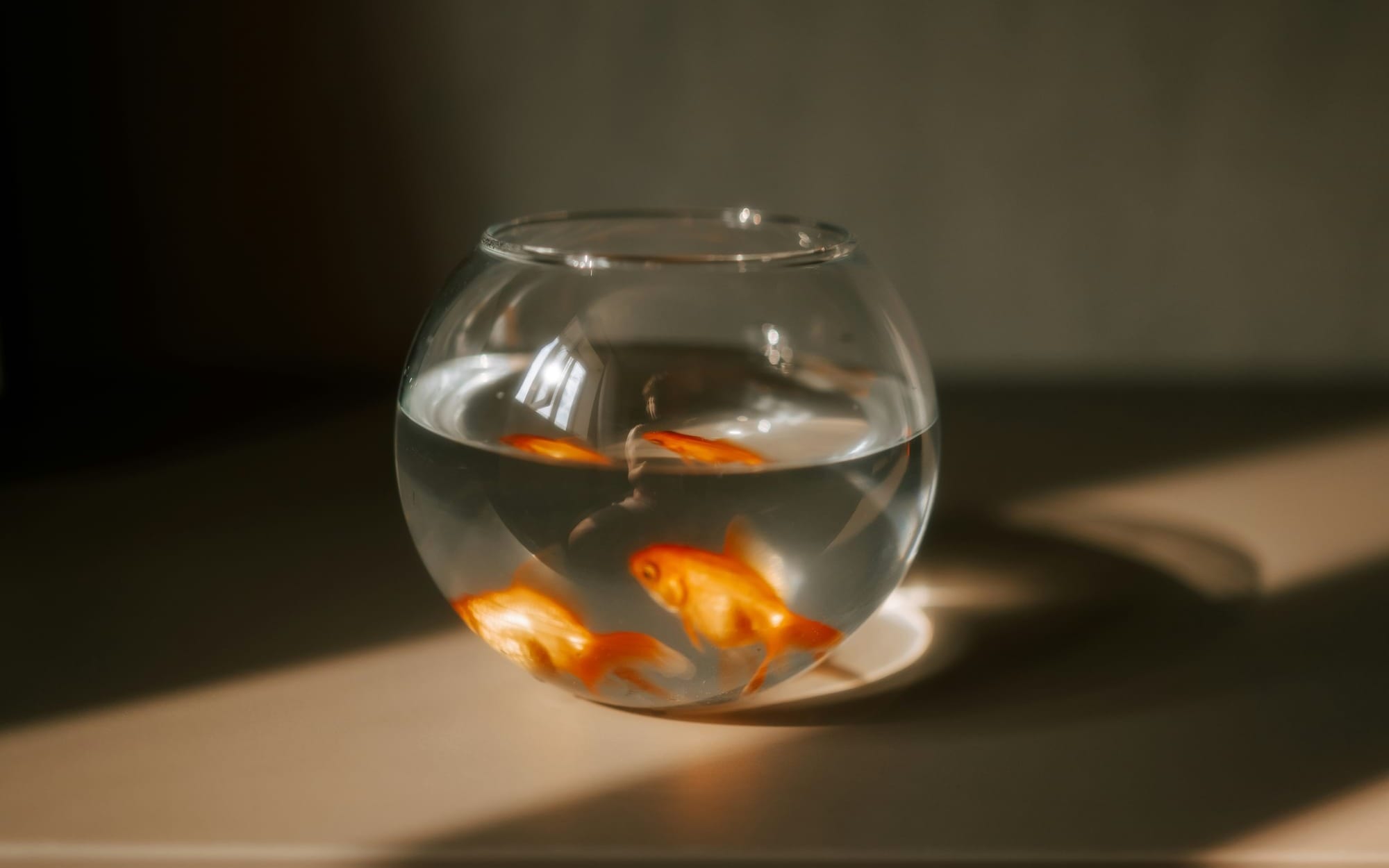
Modern society has a way of putting the "popular" types on a pedestal and quietly pushing the rest of us - the everyday people - to the side. But honestly, the bigger problem isn't out there in society. It's inside each of us.
If you find yourself desperately trying to climb a tree when you are, in fact, a fish - you're not alone. There's a quote often attributed to Einstein that stopped me in my tracks: "Everybody is a genius. But if you judge a fish by its ability to climb a tree, it will live its whole life believing that it is stupid" (Anonymous, n.d.).
My goal should have been to feel confident in the depth of my own waters — not to keep eyeing everyone else's trees. I never belonged there. I just didn't know yet that I had my own calling, my own place in this world.
From Imposter Syndrome to the Storm

The university years eventually passed, and I stopped caring about those people. But the feelings of inferiority didn't disappear - they just shifted shape. They quietly turned into imposter syndrome, that persistent, nagging sense that you're not as capable as others believe you to be, and that sooner or later, someone will find you out (Clance & Imes, 1978). I found myself comparing myself to others in almost every corner of my life. The feeling of not being good enough became, at times, overwhelming.
It took crossing some deep valleys and rough patches to finally get to know myself like never before.
Here's what I've come to understand: comparing yourself to others is shallow. It's like a swan wishing it were a peacock, completely blind to its own grace. But in the middle of a real storm, there's no room for shallow. When you're drowning, you find out fast that you have strong muscles you didn't know about. You learn to swim. You breathe. You build a crisis plan on the spot. You discover a kind of strength that only shows up when things fall apart.
My storms set me free. My obstacles showed me that I wasn't an ugly worm — I was a butterfly waiting for the right moment to come out of the cocoon. I had just been misreading my own transformation all along.
So please, don't be afraid of obstacles. Start seeing them as stepping stones. Here's what that transformation actually looks like, step by step:
1. The Inner Compass of Validation
Your mindset starts to shift. You stop looking outward for approval and start finding it in yourself. Inner validation becomes the real turning point - you get comfortable being in the driver's seat of your own story and stop waiting for someone else to tell you you're enough. As Emerson (1841) wrote, true self-reliance begins the moment you trust your own instincts over the noise of the crowd.
This isn't just poetic — it maps onto how identity researchers now describe the architecture of authenticity. A narrative-identity study analyzing how people actually experience being authentic versus inauthentic found that authentic living — acting in line with your true beliefs rather than bending to external influence or drifting into self-alienation — is a strong, consistent predictor of psychological well-being (Wilt, Thomas, & McAdams, 2019). In other words: the inner compass isn't a metaphor. It's a measurable, well-being-generating way of moving through the world.
There's a second, more precise piece of this puzzle worth naming. Self-discrepancy research distinguishes between two very different projects: chasing the traits you wish you had (wanting to be who you want to be) versus genuinely wanting the traits you already possess (wanting to be who you are). Across several studies, it was the second one — actual self-regard, not the pursuit of an ideal — that consistently and uniquely predicted well-being, positive affect, and psychological growth (Hardin & Larsen, 2014). That's the inner compass in a single sentence: the goal was never to become someone else's ideal. It was to want who you already are.
2. This is Me, With Ups and Downs
Storms teach you self-compassion - and please, don't confuse that with self-pity. Self-compassion means embracing yourself as you actually are: the ebbs, the flows, the messy parts. It means being kind to yourself, letting go of constant self-judgment, and feeling okay - even good - in your imperfection. Neff (2011) describes this as one of the most transformative shifts a person can make: treating yourself with the same warmth you'd offer a good friend going through a hard time.
3. This is My Hidden Gem
When you're fighting to stay afloat, you start digging. You become a bit of a detective, uncovering values and strengths you either ignored or didn't know existed. These are your core values - and once you find them, they become your compass.
"Why are you trying so hard to fit in when you were born to stand out?" — Oliver James
You stop trying to squeeze into rooms where you don't belong and start finding the ones where you can actually shine. You realize it's your time to bloom - and that becoming yourself is, quietly, one of the most powerful things you can do.
New research on identity formation backs this up directly. A study on how identity commitment plays out across different areas of life — work, relationships, values — found that firmly committing to who you are acts as a shield against absorbing other people's expectations of you. When that commitment doesn't solidify, people become far more vulnerable to self-alienation and to being shaped by a world that has other plans for them (Karaś, Jastrzębski, Szewczyk, & Skurka, 2026). Digging for your hidden gem, in other words, isn't a nice-to-have. It's protective.
4. Do Not Cross Beyond This Border
Once you're no longer looking for validation from others, you start paying closer attention to what you actually need. And that means setting boundaries. Learning to say no is hard - genuinely hard - but it's how you prove to yourself that you know what aligns with your values and what doesn't. Every no you mean is a door opening to a more honest life.
5. My Vulnerability is My Power
Stepping out of the cocoon means leaving behind the comfort bubble that kept you "safe" - and small. Accepting who you are, fully, is an act of bravery. Brown (2012) argues that vulnerability is not a weakness to overcome but the very foundation of courage - the willingness to show up and be seen, even when there are no guarantees.
That claim now has experimental backing, too. Across five separate studies, researchers found that people who acted authentically — rather than bending to fit in — reported feeling more powerful, not less, and that outside observers rated authentic people as more effective leaders and negotiators (Gan, Heller, & Chen, 2018). The unknown is uncomfortable, but it's also where the most powerful version of you lives — and, it turns out, where other people can see it too.
6. I Am as Unique as My Fingerprint
Sometimes you don't realize how special you are until you've hit a wall. Our workplaces, our social feeds, the relentless highlight reels - they can make you feel invisible or not quite enough. But you are a human being, singular and irreplaceable.
"Don't compare yourself to anyone. Your uniqueness is what makes you incomparable." — Lahart (2018)
There is something genuinely beautiful about being you. Don't let it go to waste by becoming someone else. You spent so long thinking you were a worm - but you were always a butterfly, just mid-transformation. Now you're out, wings open, finding your way in the sun.
7. I Found My Tribe and My Home
You stop forcing yourself into spaces that were never really yours, and you start building your own. You invite in the people who share your values, your energy, your way of seeing the world - people who bring real warmth and strength into your life.
Among them, you're not the "weird one" anymore. You're a friend, an anchor, someone's favorite conversation. You're not trying to fit in - you're fitting out, exactly where you belong. As Lewis (1960) beautifully captured it: "Friendship is born at that moment when one person says to another, 'What! You too? I thought I was the only one.'" That's when you know you're home.
Conclusion: Hearing Your Inner Voice

Finding your way back to yourself in a noisy, upside-down world is not easy. The word "value" has been stretched and misused, and the noise makes it hard to hear much of anything - let alone your own inner voice.
So stop for a moment. Pause the noise. Let your inner self speak.
You'll realize the only comparison worth making is with who you were yesterday. And when you do, you'll see how far you've already come.
Sometimes the journey inward doesn't just change your direction - it changes your destination entirely. When you truly discover yourself, your inner compass takes over. Every map needs one to find the waters where it belongs. Stay anchored in yourself. Appreciate who you are. Embrace the imperfection. You are unique, you have real value, and your purpose is waiting for you right there - in alignment with who you actually are. This kind of self-realization, sustained even through hardship, is at the heart of what resilience researchers call a eudaimonic approach to well-being: meaning-making, self-realization, and growth that deepen precisely because of, not despite, life's difficulties (Ryff, 2014).
"To be yourself in a world that is constantly trying to make you something else is the greatest accomplishment." — Emerson (1841)
Next Steps for Your Healing Journey
Breaking free from the trap of comparison and imposter syndrome isn't just a mental shift—it requires actively soothing your overloaded nervous system and restoring your physical energy. As a medical professional and health coach, I have designed two distinct paths to help you move out of survival mode and reclaim your vitality:
Path 1: The Self-Paced Guide
Dive into my concise digital mini-course, Tired and Wired: A Medical Professional's Guide to Overcoming Chronic Exhaustion. This practical, science-backed guide cuts through generic wellness advice to give you immediate, actionable tools to reset your circadian rhythm, calm your nervous system, and rebuild your energy from the cellular level up.
Path 2: The Deep Transformation
If you are ready for a dedicated, personalized roadmap to recover from deep burnout and prolonged stress, applications are now open for my exclusive Stress Less, Live More 6-month health coaching journey. Together, we will blend clinical insights with compassionate, holistic protocols to help you regulate your nervous system, set boundaries, and fully restore your health.
References
Albarracin, M., Bouchard-Joly, G., Sheikhbahaee, Z., Miller, M., Pitliya, R. J., & Poirier, P. (2024). Feeling our place in the world: An active inference account of self-esteem. Neuroscience of Consciousness, 2024(1), niae007. https://doi.org/10.1093/nc/niae007
Brown, B. (2012). Daring greatly: How the courage to be vulnerable transforms the way we live, love, parent, and lead. Gotham Books.
Clance, P. R., & Imes, S. A. (1978). The imposter phenomenon in high achieving women: Dynamics and therapeutic intervention. Psychotherapy: Theory, Research & Practice, 15(3), 241–247. https://doi.org/10.1037/h0086006
Emerson, R. W. (1841). Self-reliance. In Essays: First series. James Munroe and Company.
Festinger, L. (1954). A theory of social comparison processes. Human Relations, 7(2), 117–140. https://doi.org/10.1177/001872675400700202
Gan, M., Heller, D., & Chen, S. (2018). The power in being yourself: Feeling authentic enhances the sense of power. Personality and Social Psychology Bulletin, 44(10), 1460–1472. https://doi.org/10.1177/0146167218771000
Hardin, E. E., & Larsen, J. T. (2014). Distinct sources of self-discrepancies: Effects of being who you want to be and wanting to be who you are on well-being. Emotion, 14(1), 214–226. https://doi.org/10.1037/a0033893
Karaś, D., Jastrzębski, J., Szewczyk, Z., & Skurka, M. (2026). Navigating the path to authenticity: Identity processes across various life domains. Current Issues in Personality Psychology, 14(2), 99–106. https://doi.org/10.5114/cipp/218910
Lahart, S. (2018). Overcoming life's obstacles: Enlighten, encourage, empower. Independently published.
Lewis, C. S. (1960). The four loves. Geoffrey Bles.
Neff, K. D. (2011). Self-compassion: The proven power of being kind to yourself. William Morrow.
Ryff, C. D. (2014). Self realization and meaning making in the face of adversity: A eudaimonic approach to human resilience. Journal of Psychology in Africa, 24(1), 1–12. https://doi.org/10.1080/14330237.2014.904098
Wilde, O. (1905). De profundis. Methuen & Co.
Wilt, J. A., Thomas, S., & McAdams, D. P. (2019). Authenticity and inauthenticity in narrative identity. Heliyon, 5(7), e02178. https://doi.org/10.1016/j.heliyon.2019.e02178